By now, you’ve likely watched the webinars and read all about the Giving USA 2024 report. (Hopefully that includes our very own Lynn Gaumer’s expert analysis!)
Do you still have questions about how all this data applies to your organization? Get answers from our Stelter strategists as they break down the report by nonprofit subsector.


In part 3 of our 4-part series, Client Strategist Kit Lancaster explores three subsectors—digging into where the gifts came from, outlining the types of initiatives the money will support, and providing key takeaways for each.
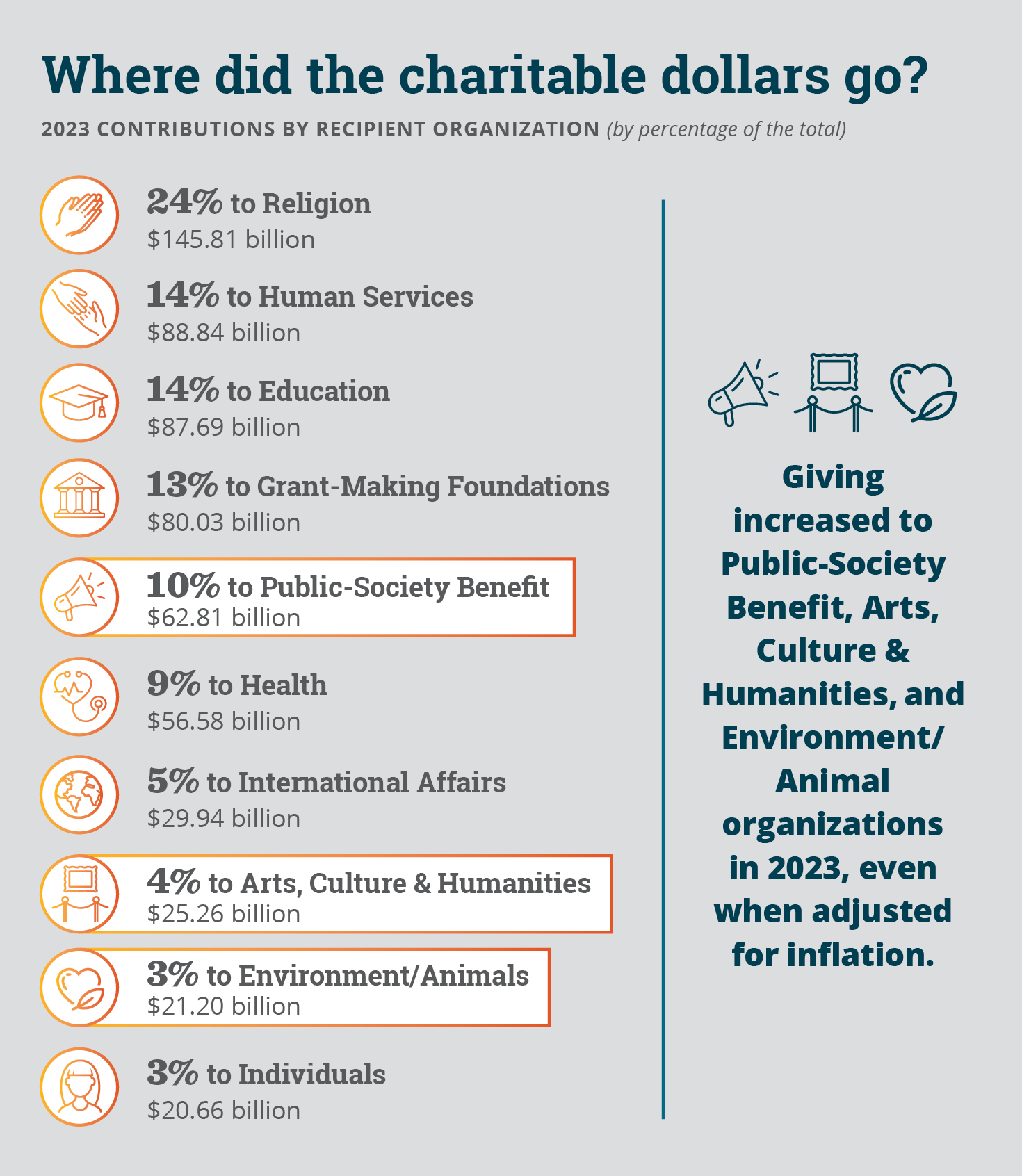
We continue our series on Giving USA 2024 with a look into three of the smaller subsectors: Public-Society Benefit; Arts, Culture and Humanities; and Environment and Animals. Together, these subsectors received roughly 17% of total giving to nonprofits in 2023. Giving in these subsectors increased between 2022 and 2023, with inflation-adjusted increases ranging from 3.9% (environment and animal organizations) to 7.2% (public-society benefit organizations).

Giving to Public-Society Benefit Organizations
The public-society benefit subsector, which includes a wide range of organizations that address civic and social causes, saw a significant increase in giving in 2023. Contributions grew by 11.6%, or 7.2% when adjusting for inflation, making it one of the fastest-growing subsectors.

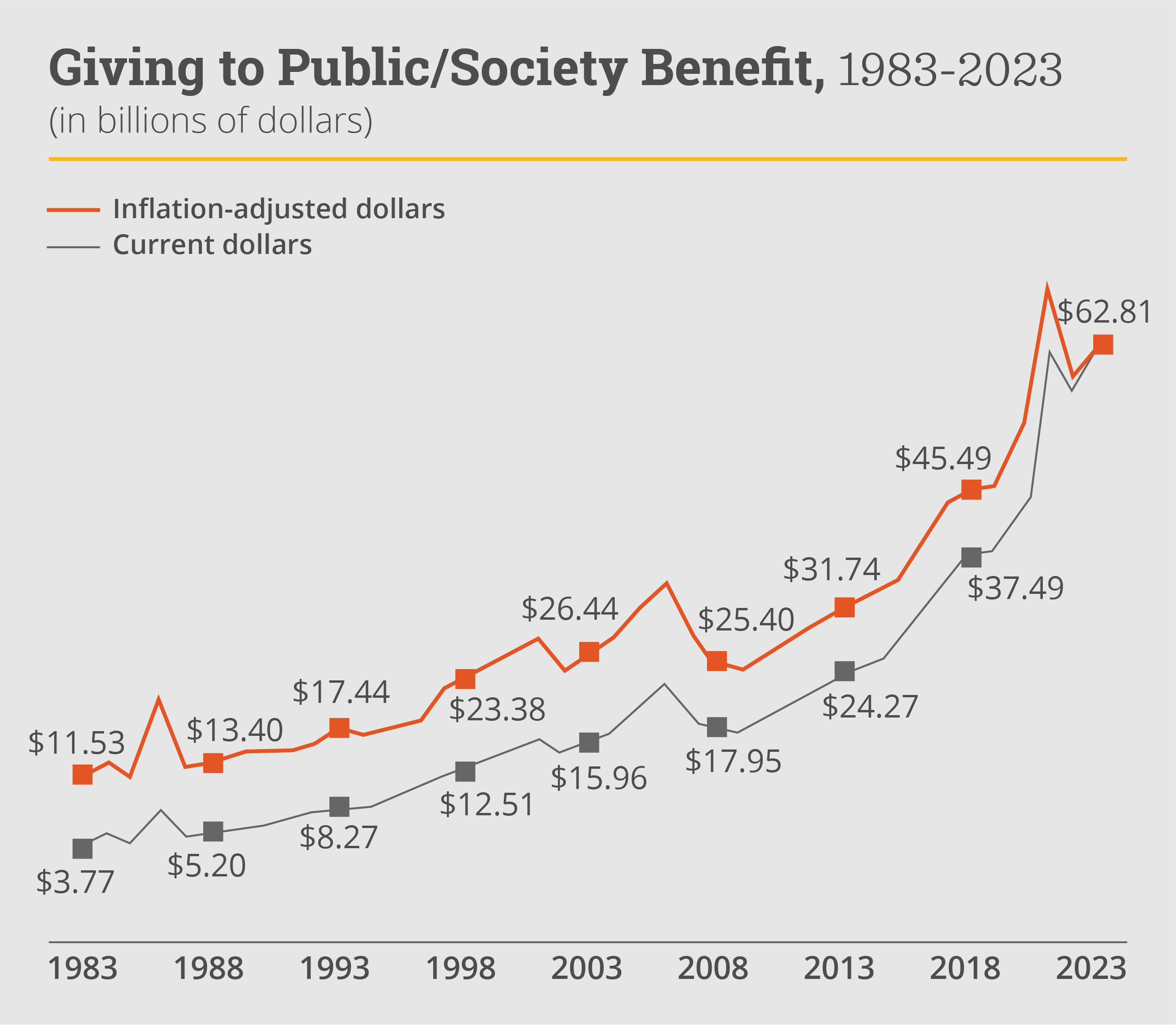
This growth is being driven by response to global conflicts, as well as increased attention to societal issues like civil rights, voting rights and racial justice. Gifts to national donor advised funds like Fidelity Charitable are also counted in the public-society benefit subsector.
Where is the Money Coming From?
Much of the growth in this subsector can be attributed to large gifts, including bequests, from philanthropists focused on systemic change. Notable contributors include MacKenzie Scott, who made significant donations to 30 public-society benefit organizations in 2023.
Where is the Money Going?
Funds in the public-society benefit subsector are primarily directed toward advocacy and organizations that work to improve the quality of life for those in their community.
Giving USA highlights four areas in particular:
- Aid to Palestine and Israel – Providing emergency assistance for those affected by the escalated conflict between Israel and Hamas. The report also highlights that many Jewish Federations received an influx of gifts following October 7.
- Women’s rights – Advancing reproductive justice, strengthening reproductive laws and policies, and improving economic security for women and girls.
- LGBTQ+ rights – Supporting civil rights, preventing suicide in LGBTQ+ youth, and responding to an increase in anti-LGBTQ+ legislation.
- Voting rights – Supporting democracy-related issues before the 2024 presidential election.
What’s the Outlook?
As global conflicts and social justice movements continue, donations to public-society benefit organizations are expected to remain strong. Advocacy groups will likely see sustained support, especially in the lead-up to major political events like the U.S. elections. However, the sector may struggle to maintain donor engagement if public attention moves away from some of these key issues.
Key Takeaways
- Public-society benefit organizations are seeing significant growth, particularly from large gifts intended to address systemic social issues.
- The future of this subsector looks strong as societal challenges remain at the forefront of donor priorities.
- Advocacy and civil rights are key focus areas for donations in this sector.
Giving to Arts, Culture, and Humanities Organizations
Giving to arts, culture, and humanities organizations saw a resurgence in 2023, following a dip during the COVID-19 pandemic. The subsector received $25.26 billion in 2024, or 4% of all 2023 contributions. This is an 11% increase in gifts from the prior year, and a 21% increase over the last two years, reaching a record high when adjusted for inflation.
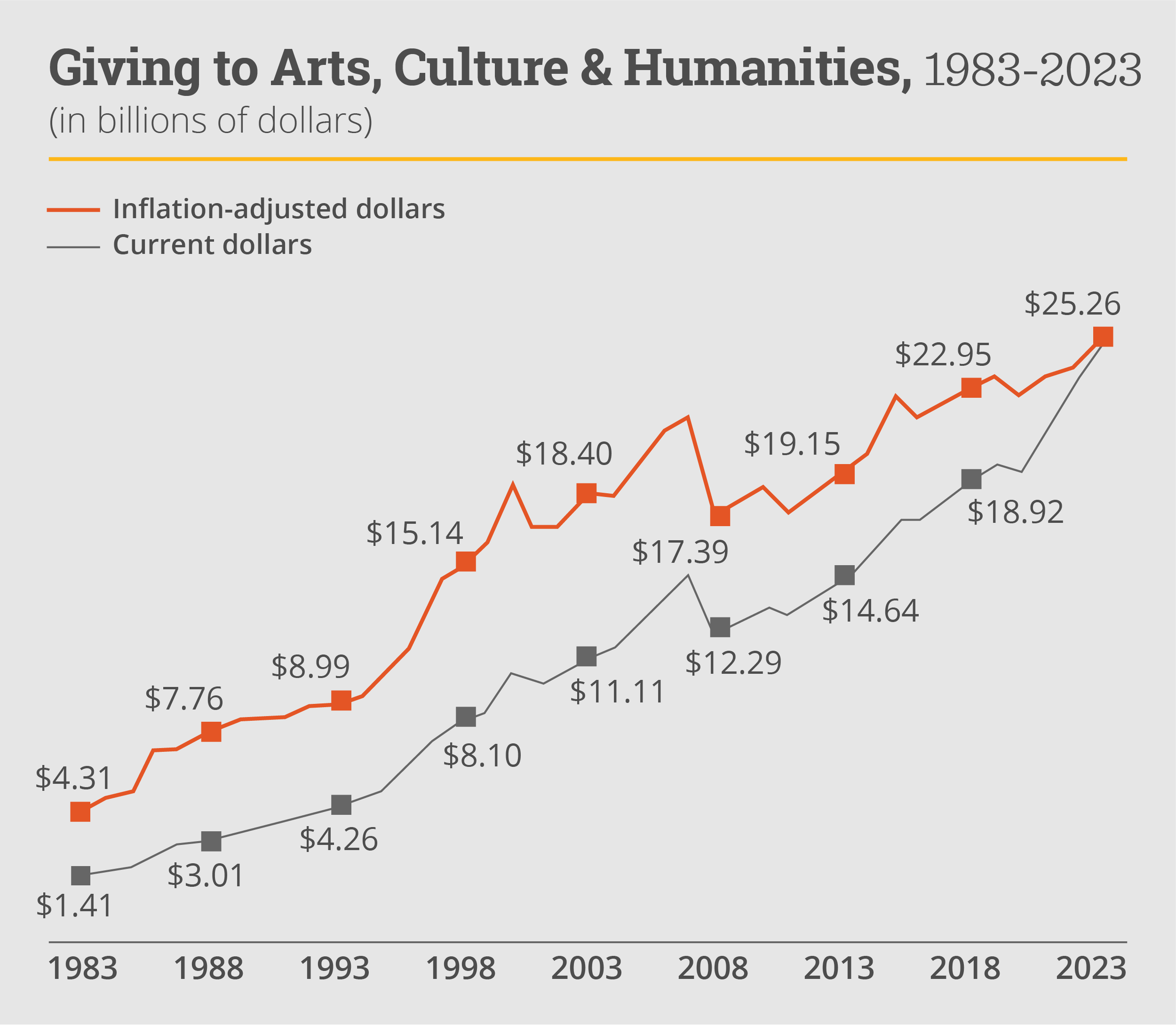
The growth trend is a welcome relief, especially for organizations that have historically relied heavily on revenue from in-person attendance. While museums are largely seeing visitation numbers return to pre-pandemic levels, many performing arts organizations continue to see significantly reduced attendance rates, leading to fewer performances and other cost-saving measures.
Where is the Money Coming From?
Individual donors and family foundations continue to be a large source of funding in the arts and culture subsector. Many of these gifts come from long-standing patrons of the arts who are committed to preserving cultural heritage. Notable donations in 2023 included several significant bequests aimed at education programs and facility expansions.
Corporate sponsorships remain an important source of revenue, particularly for large-scale events and exhibitions. Additionally, government grants, including pandemic relief funds, have provided crucial support to arts organizations in recent years.
Where is the Money Going?
The following areas were highlighted in the Giving USA report:
- Diversity, equity, accessibility and inclusion (DEAI) goals – Expanding programs to connect with new audiences and increasing diversity of staff in leadership positions
- Operational recovery and support – Providing critical funding for organizations that rely on in-person attendance
- Establishment of new museums – Supporting capital campaigns for the Theodore Roosevelt Presidential Library in Medora, ND, the National Medal of Honor Museum and the Smithsonian American Women’s Museum
What’s the Outlook?
While philanthropy in the subsector has rebounded, challenges remain, particularly around audience engagement and long-term financial sustainability. Digital programming, which flourished during the pandemic, continues to offer possibilities for growth. The focus on DEAI will also likely drive new funding, as organizations that prioritize inclusive practices may find themselves more competitive for both government and private grants.
Key Takeaways
- Arts, culture, and humanities organizations are largely experiencing a recovery, with individual donors playing a major role in the resurgence.
- DEAI initiatives are receiving increasing attention from funders, alongside traditional support for cultural preservation.
- The subsector’s future depends on how well it can adapt to post-pandemic realities, including hybrid digital/in-person programming.
Giving to Environment and Animal Organizations
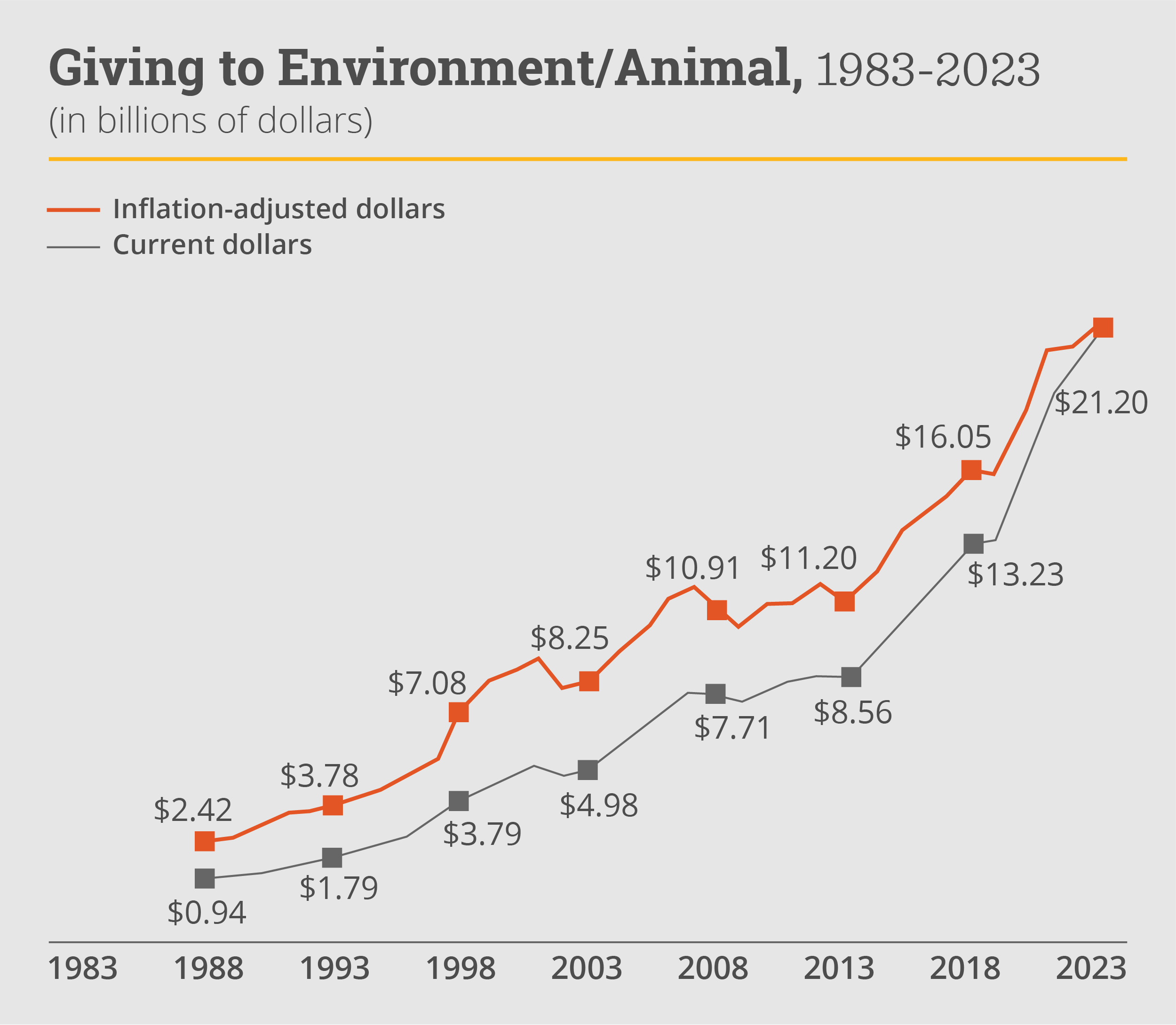
Contributions to environment and animal organizations have increased steadily over the past decade.
In 2023, giving to this subsector grew by 8.2%, or 3.9%, when adjusted for inflation. This growth reflects rising awareness of environmental crises such as wildfires, extreme heat, deforestation and endangered species. Total contributions to environment and animal organizations amounted to $21.20 billion, or 3 percent of all charitable giving in 2023.
Where is the Money Coming From?
A significant portion of donations to environment and animal organizations come from individual donors. These donors range from small, one-time contributors to major philanthropists who focus on long-term environmental sustainability. In 2023, mega-gifts from high-net-worth individuals played a key role in boosting the overall numbers, with several donations exceeding $10 million.
Online giving and monthly sustainer programs continue to be a significant source of revenue from individual donors in this subsector, although M+R Benchmarks 2024 reports that online giving to environmental organizations declined by 3 percent in 2023. Online giving for wildlife and animal welfare organizations stayed flat. Wildlife and animal welfare organizations continue to see strong engagement on social media platforms, with many animal organizations successfully using TikTok as part of their fundraising and engagement efforts.
Corporate giving has also risen, particularly from industries seeking to improve their environmental impact. Tech companies, for example, are increasingly directing corporate social responsibility (CSR) funds to sustainability initiatives. Additionally, foundations with missions aligned with environmental goals have continued to provide consistent funding to organizations tackling climate change and habitat conservation.
Where is the Money Going?
Areas highlighted by Giving USA include:
- Climate change – Advancing wildfire resiliency, supporting clean energy and funding advocacy for climate action.
- Federal funding access – Assisting with technical assistance and capacity building to help nonprofits secure and use climate-focused federal funds.
- Environmental justice – Addressing climate inequity, including increasing funding to BIPOC (Black, Indigenous and people of color)-led justice groups.
- Extreme heat – Funding initiatives to increase heatwave resiliency in urban areas and protect outdoor workers, residents of low-income areas, and the elderly, who are disproportionately affected by extreme heat.
- Water protection – Supporting oceanic research and efforts to remove plastic from oceans and rivers.
What’s the Outlook?
Looking ahead, the environmental and animal welfare subsector is expected to continue growing, especially as younger generations, who are more environmentally conscious, increase their charitable giving. Climate change will remain a pressing issue, and organizations that can demonstrate measurable impact will likely attract more funding.
Key Takeaways
- Giving to environmental and animal welfare causes continues to grow, driven by increasing awareness of global environmental crises.
- Individual donors, including several high-profile philanthropists, are key contributors to this sector.
- Conservation and climate action are top priorities for funding, and organizations that can demonstrate clear impact will see continued support.
Planned Giving Implications
Understanding the trends and outlook for your subsector can help you position your planned giving program for success. Consider these tips if you work in one of these subindustries:
- Identify the right audience for planned giving marketing. Individual support in each of these subindustries is expected to grow. Make sure to refresh your audience to bring in new loyal supporters. Read more about how to select the right audience for your planned giving marketing.
- Understand what your donors care about. In each of these subindustries, we’re seeing donors make significant gifts to create meaningful change on issues that are close to their heart. Make sure you’re connecting potential planned gifts to the impact your donors wish to have, and the legacy they wish to leave. Master your ability to build stronger donor relationships with this blog series. Consider a supporter survey to gather additional insights.
Next week Client Strategist Renee Durnin will wrap up our “Giving USA 2024: A Closer Look” series with her analysis of giving to cause-based nonprofits: Religion, Human Services and International Affairs. And, if you’ve missed any of our earlier posts, access them using the links below.