


By now, you’ve likely watched the webinars and read all about the Giving USA 2024 report. (Hopefully that includes our very own Lynn Gaumer’s expert analysis!)
Do you still have questions about how all this data applies to your organization? Get answers from our Stelter strategists as they break down the report by nonprofit subsector.
In part 2 of our 4-part series, Client Strategist for Education Jana Cobb explores where gifts to education came from and provides guidance on how to move forward with your donor outreach based on this data.
Education Giving: By the Numbers
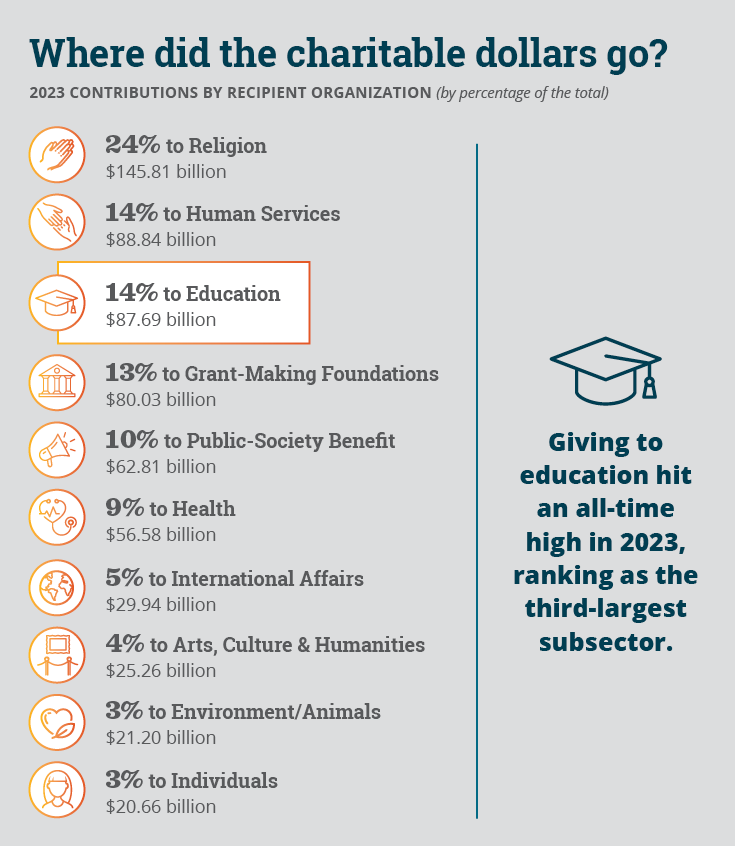
Giving USA 2024 brought a wave of encouraging news for the education sector. In a year where some nonprofit sectors saw flat or reduced charitable giving, education hit an all-time high and ranks as the third-largest subsector, capturing 14% of total giving. This demonstrates the deep commitment donors have toward supporting learning at all levels.
4 Key Data Points
- Education Sector Resilience: The education sector saw an 11.1% increase in charitable donations between 2022 and 2023, amounting to an all-time high of nearly $87.69 billion in total giving (an increase of 6.7% when adjusted for inflation).
- Cumulative Increase in Giving: When combined with 2021-2022 numbers, the cumulative increase in giving to education from 2021-2024 was 26.2% (or 12.2% when adjusted for inflation), the largest increase compared to other subsectors. This reflects positively on donor interest in educational institutions.
- Bequests Holding Firm: From data reported by CASE to Giving USA, higher ed institutions received $3.5 billion from estates in 2022, and in 2023 that number increased to $3.7 billion, a 4.8% year-over-year increase (equating to a 0.6% growth when adjusted for inflation).
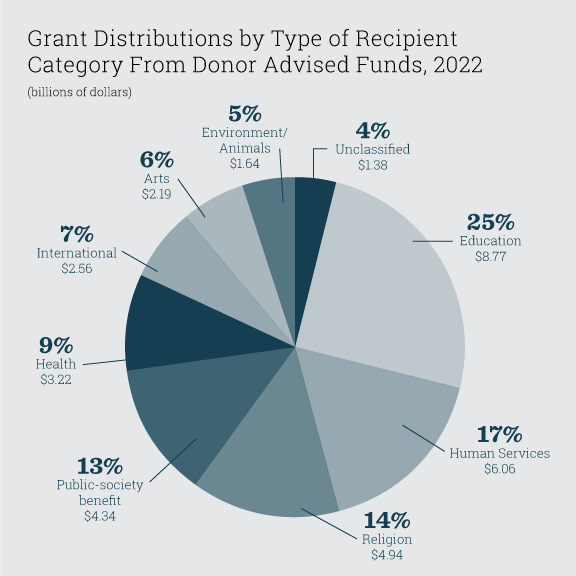
- Donor Advised Funds (DAFs): DAFs continue to be a significant source of charitable support, with the largest share of DAF grant dollars (25%) going to education organizations.
Giving to Higher Education
Higher education reached $58 billion in 2022-2023, which was a 2.5% decline of $1.5 billion from the all-time high set in 2021-2022. Adjusted for inflation the decline was 5% in comparison to the previous year.
Where Is the Money Coming From?
Large gifts. The number and size of $100 million+ mega gifts to universities grew from 7 gifts in 2022 to 11 in 2023. In 2022 the gifts were valued at $1.08 billion and 1.8% of total educational giving, and in 2023 gifts were valued at $2.24 billion and 3.9%, doubling the share of total educational giving.
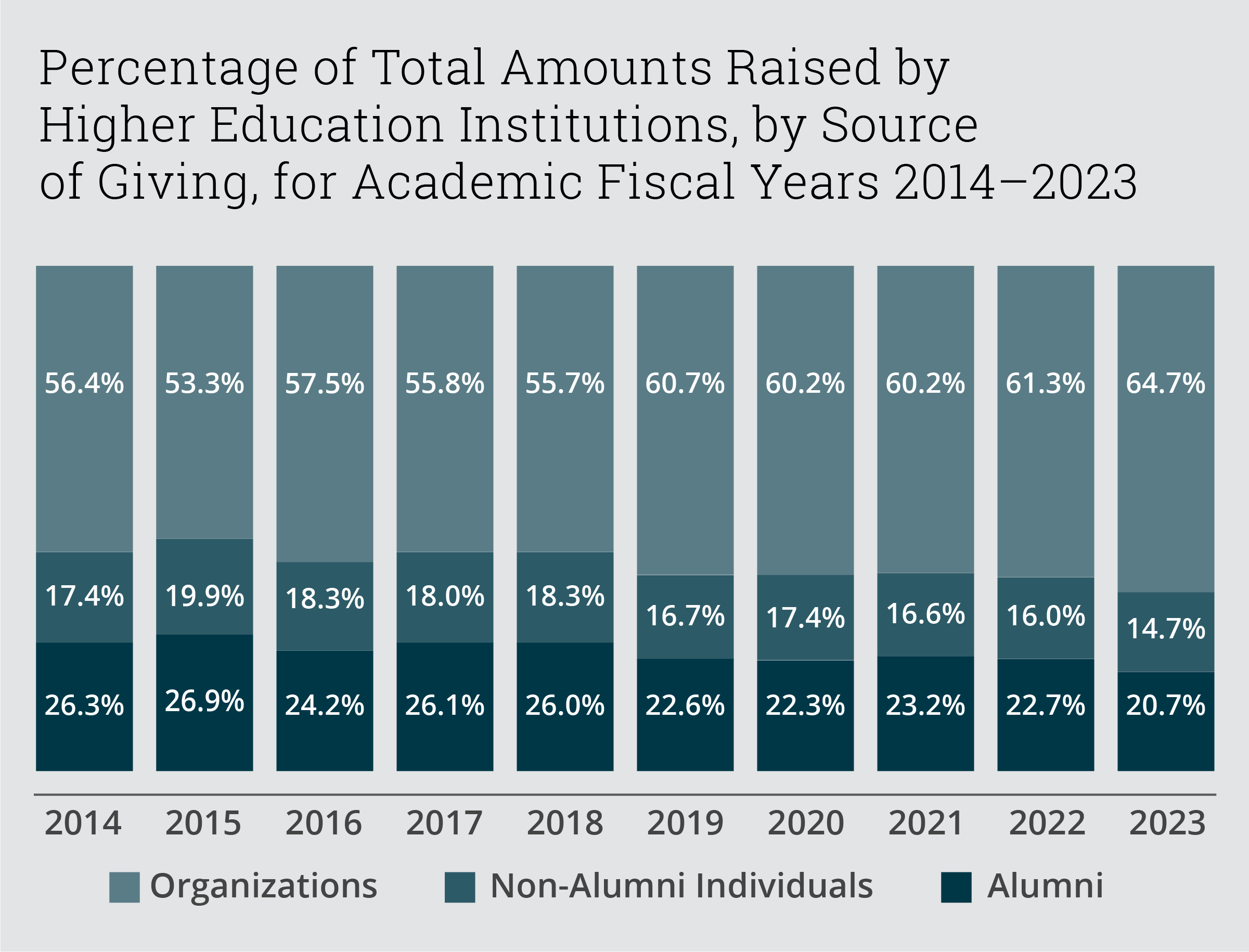
Organizations, Alumni and Non-Alumni. There was a decline in individual giving that can possibly be linked to the market decline at the end of 2022. However, giving by organizations (DAFs, corporations, foundations and “other organizations”) rose slightly.
Key Takeaways for the Education Sector
Stay connected with alumni. Those alumni who report feeling connected are 23 times more likely to give compared to those who feel disconnected. Focus on strengthening outreach and meaningful engagement efforts.
Highlight your institutional values and funding priorities. Use messaging that helps define and highlight your institutional values. Alumni seek to understand how their own identities and philanthropic priorities align with their alma mater. The “2024 CCS Philanthropy Pulse” report indicates that 77% of post-secondary and 84% of primary and secondary schools believe that DEI is critical to convey their institution’s mission and fundraising for DEI initiatives will be instrumental in linking values to outcomes in the education space.
Keep promoting the long-term impact of bequests and planned gifts. Use storytelling, social proof and values-based language to emphasize how bequests and other planned gifts continue to transform your institution, enhance student experiences and create positive impact within our communities.
Leverage donor advised funds. With DAFs continuing to grow in popularity, it’s vital to make it as easy as possible for donors to direct their DAF gifts to your organization. While contributions to DAFs tend to happen in the final quarter of the year, grants from DAFs are shown to happen earlier in the year, with 68% occurring from Q1-Q3. Start your targeted direct mail and digital messaging early in the year when many donors are making decisions about their annual charitable plans. And don’t forget that some DAF sponsoring organizations allow an organization to be named beneficiary of a DAF after the donor’s lifetime.
Check back next week when Client Strategist Kit Lancaster will examine giving to community-based nonprofits: Public-Society Benefit, Arts & Culture and Environment/Animal Welfare. And, if you missed last week’s blog exploring the Health sector, you can read it here.
More From Jana



[…] is the third-largest subsector in the nonprofit world, receiving 14% of charitable donations – which indicates a high level of support for the all-important missions […]