

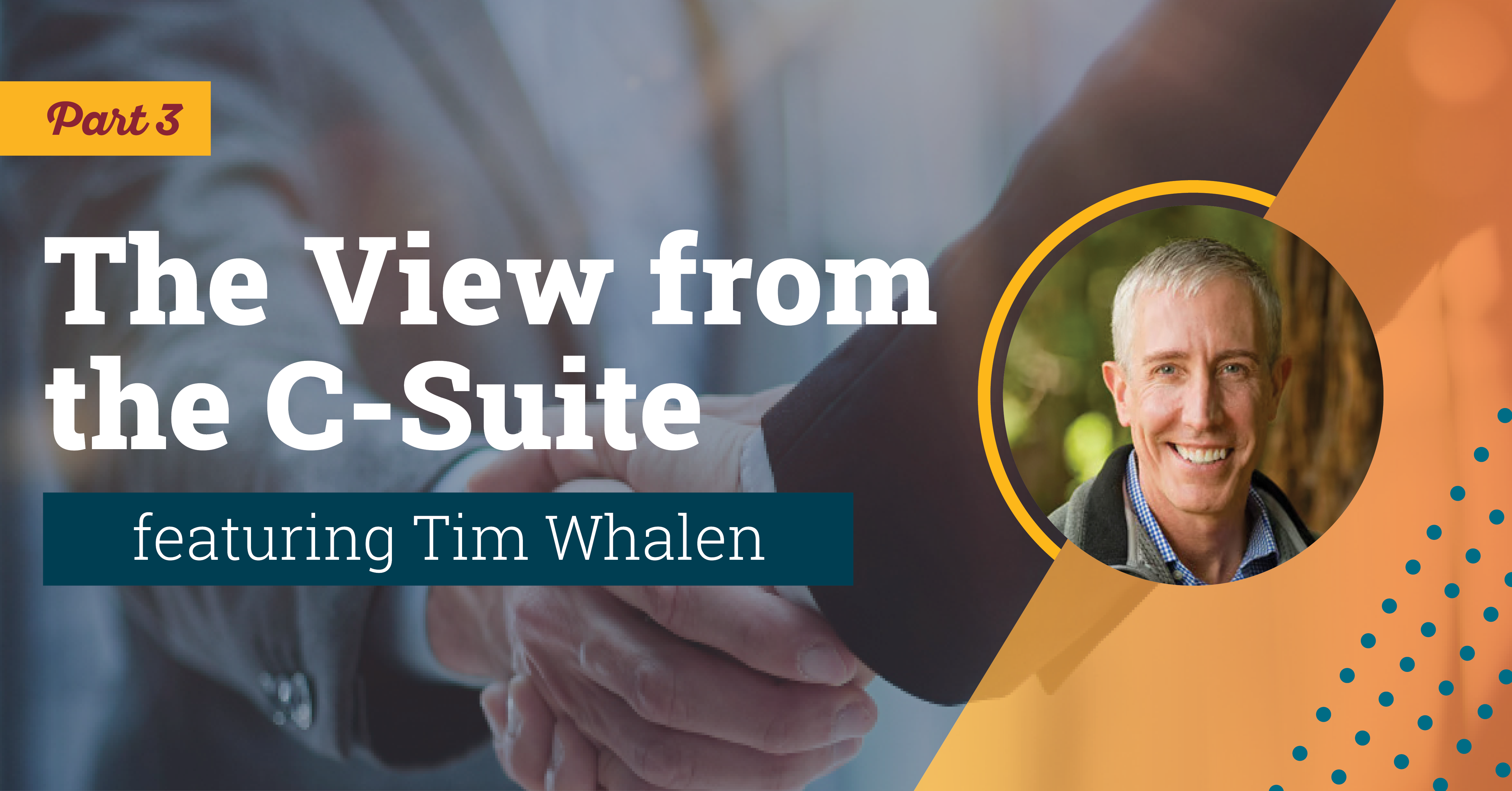
Welcome back to our new conversation series exploring planned giving through the eyes of senior leaders. For our third installment, I sat down with Tim Whalen, chief development officer of Save the Redwoods League. With more than 20 years of fundraising leadership experience, Tim has led multi-million-dollar development programs and campaigns for some of the San Francisco Bay Area’s leading cultural organizations. He is now approaching his 12th year at Save the Redwoods.
If you know a C-suite leader I should talk to, reach out to me at nathan.stelter@stelter.com to recommend them.
Nathan: Tim, thanks so much for taking time to speak with me today. We’ve loved our partnership with you and the work we’ve done over the years. You have a lot of things you’re responsible for as chief development officer. As you think about your organization’s long-term strategy, how does planned giving fit in from a revenue diversification or financial stability standpoint?
Tim: Well, I think of all the various organizations I’ve been with over the years, Save the Redwoods League feels unique. This organization is 100-plus years old, and our mission to protect and restore the Redwood Range really resonates with people very deeply. And so, we find that on an annual basis, bequest income is pretty significant. We project annual bequest income based on historical averages, and we’re lucky enough that it’s typically 20-30% of what we bring in every year.
Nathan: That’s amazing. Why do you think that is?
Tim: I’m convinced it’s because the organization made a commitment to gift planning a long time ago and has continued to put gift planning in front of our donor base for a very long time. I think it’s the sustainability and longevity of our messaging out to our donors that’s created this extraordinary stream of bequest income.
Nathan: You’re right, planned giving is a long, long play—and having the foresight to be thoughtful and strategic about it is where a lot of organizations sometimes struggle. So, what factors influence your decision making around investing in resources and staffing? Because inevitably, cash is king, and pressing and immediate needs are always facing us.
Tim: There’s an understanding that we need gift planning, and the idea of providing for Save the Redwoods in your will should be ever-present across all our giving programs. It’s why we work with you all and make that commitment to a drip marketing effort throughout the year. Whether it’s our annual membership campaign or even our major gift work, we really want our donors to get that constant reminder. Fortunately, our leadership recognizes that what we’re doing today will benefit the organization down the road. We always say whenever we receive a big, unexpected bequest, “Well…the folks who came before us made that happen, and our job today is to make those happen for the future—for the people who follow us.”
Nathan: So well put. Now that we’re fully starting to see the benefits of the Great Wealth Transfer, some organizations are realizing, “Oh, wow, we haven’t done enough,” or “We haven’t been as consistent.” But organizations that have invested consistently are reaping some of those rewards while continuing to build their pipelines for future needs.
Tim: That’s right. And because we’re Redwoods, there’s this idea of longevity. Time has a different meaning at Save the Redwoods because redwoods live for thousands of years, and we’re about creating the redwood forest of the future. So, the messaging of gift planning is almost synonymous with how we think about the work we do in the Redwood Range.
Nathan: You really do have a terrific story that sets itself up for this type of legacy giving. As we’ve helped you build your ongoing outreach efforts, we’ve focused on sharing stories, educating and building awareness, and encouraging people to raise their hands. When you’re trying to assess the value or the ROI on those efforts, how do you look at that? Beyond the bequest revenue, how do you know that you have a healthy pipeline?
Tim: One thing we track every year is number of new Legacy Circle members. Even if we don’t know the value of their intentions, we track those new members. And we pay attention to continually growing our membership, so that’s one way we can say that we’re making progress. We also track the click-through rates and the response rates to all the work that we’re doing with you. And when we survey our members more broadly, there’s always a question like, “Have you considered including Save the Redwoods in your estate plan?” We want to make sure our members are cognizant of letting us know about their plans.
Nathan: That’s so important. What about having folks in different leadership positions that really understand the value? How important is it to have advocates at a variety of levels of the organization?
Tim: I think it makes a pretty big difference, and we’re fortunate to have really strong advocates on our board. We have Legacy Circle co-chairs—volunteer leaders that are identified within our program—and they report out to their fellow board members. One of our biggest advocates is on the Finance and Investment Committee. He’s often reporting on gift planning revenue and advocating for it in a totally different setting than, say, the Development Committee. I do think finding those internal advocates can really help sustain the investment in the program.
Nathan: That’s a great place to have an advocate. I can’t tell you how many times I’ve had a CFO ask me, “How do we get more planned gifts in sooner?” Well, that’s not something we can really control. We can help you build the pipeline, and we can help you build awareness. But when they actually come in—that’s not under our control. And I think that uncertainty can make it difficult for organizations to justify the investment. So, to wrap up, what advice would you give nonprofit leaders who are weighing the benefits of investing time, energy and resources in a planned giving program?
Tim: It’s a great question. I have been in organizations where the income from gift planning wasn’t very significant, and so it was harder to justify. But even a small organization can see great returns if they’re making the investment now. It has to be understood that this is for the sustainability of the organization in the future.
Another way that we’ve been able to get some traction is getting one of our advocates to make an outright gift as a challenge to inspire new gift planning donors. We’ve done this with a $100,000 challenge, where a donor made a $1,000 gift for every new Legacy Circle member, up to $100,000. It’s an opportunity to not only leverage an outright gift but also build your legacy society.
Also, within our organization, we’ve made planned giving very visible to everyone. When we receive a bequest, we celebrate it. We share the story of the donor, who they were, how long they were a member and what their support meant to the organization. Even if it’s a modest bequest, we take the time to share that story so the entire staff is reminded of the importance of planned giving.
Nathan: I think that’s an amazing practice, because so often, planned giving successes and the stories behind them are known by just a handful of people. Sharing those stories across the organization helps everyone see the impact of planned giving and understand why investing in it matters for the future. Tim, thanks so much for joining us and offering your perspective.
Tim’s experience shows just how powerful a long-term commitment to planned giving can be. It takes patience, persistence and a little faith in the future, but the impact can be felt for generations.
Stay tuned for the next conversation, where I sit down with Stuart Sullivan, chief philanthropy officer at Shriner’s Children’s.
And if you know a C-suite leader who could bring valuable perspective to this series, please contact me at nathan.stelter@stelter.com.