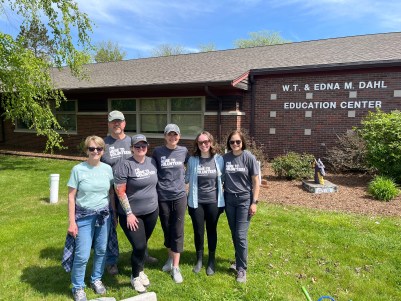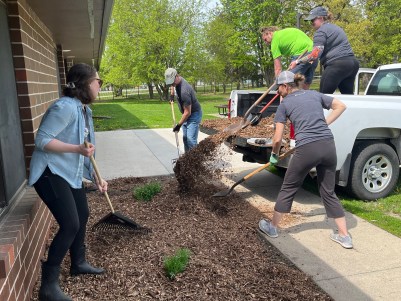
Every day, Stelter crews are hard at work using our planned giving expertise to partner with nonprofits like yours. But we also get a chance to roll up our sleeves and lend a hand to nonprofits in our communities through our Volunteer Time-Off benefit.
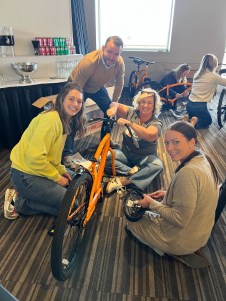
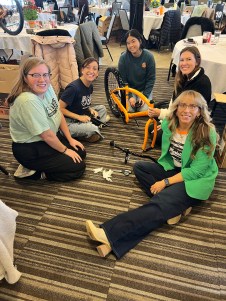
April is National Volunteer Month, and as a company focused on philanthropy, The Stelter Company embraces giving back. You can find us spreading mulch at parks, building handicapped-accessible ramps or stocking shelves at a food pantry. We do it individually and as a company. Most recently, at our all-company meeting in January, we partnered with Variety—the Children’s Charity to assemble 35 bikes to be donated to local kids.
A Popular Perk With Dual Benefits
Stelter employees receive up to 8 hours of volunteer time every year. Some take advantage of the benefit by offering their professional skills. Graphic Artist Liz Fisher Yegge created conference material for the Society for Advancement of Violence and Injury Research, a group where she had provided pro bono work in the past. Content Specialist Jamie Simmons produced marketing material for the Cedar Rapids Opera. The gig led to something bigger: serving on the board.
To inspire others, employees can share their VTO experiences on our intranet, where we track participation by department and hours logged. In my role as Resource Manager, I work with other employees to coordinate VTO projects and maintain a list of possible volunteer opportunities for groups and individuals.
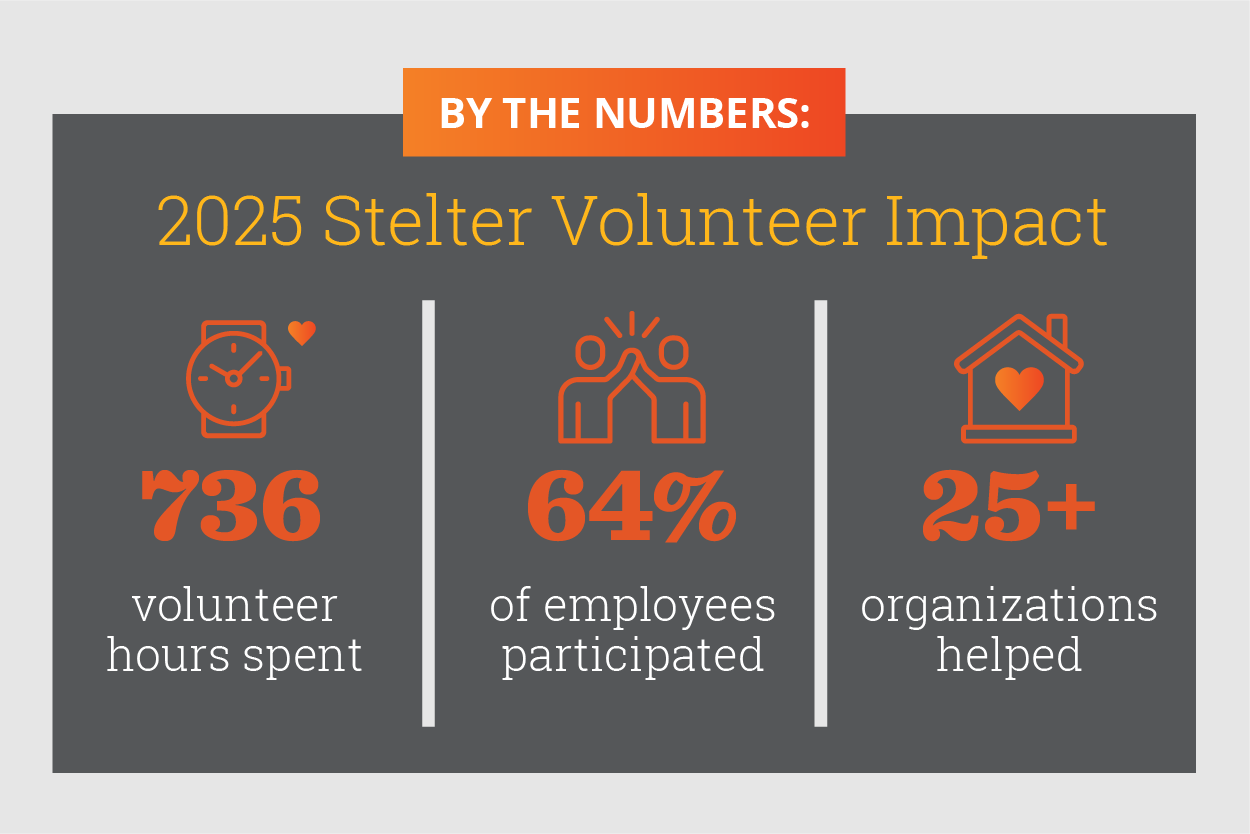
By the Numbers: 2025 Stelter Volunteer Impact
Pairing Passion With Purpose
Finding ways to use VTO is easy for me. I focus on activities close to my heart and/or align with my interests and hobbies. When my kids were younger, I coached an elementary reading team and served as a parent leader at Cub Scout camp.
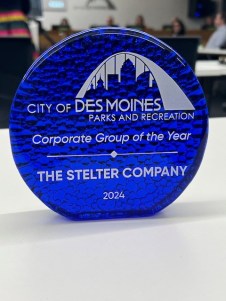
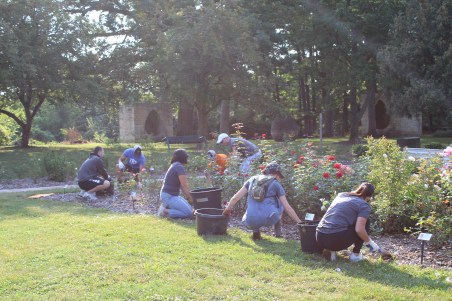
I recently became a Master Gardener and Master Conservationist, so now my VTO helps me gain more “field experience.” I’ve cut lettuce at the Meals on Wheels hydroponic garden, planted flowers for Des Moines Park and Recreation, repotted plants at the Greater Des Moines Botanical Garden and harvested prairie seed with Polk Couty Conservation.
The time I contribute is always a bright spot in my week, giving me a chance to meet new people and walk alongside a variety of nonprofits.
Stories From the Field
Stelter Strategist Kit Lancaster said she was fortunate to spend time this year in Tucson, AZ, where she enjoyed the trails and nature. Wanting to give back before she left, she learned about an invasive grass and joined a volunteer group pulling it from an area in Saguaro National Park.
“I got to see a different part of the park and meet like-minded people who are passionate about the environment. It also helped me feel more connected to my short-term home. While we may never eradicate buffelgrass, it was rewarding to see our physical efforts make a visible difference in the area where we worked. There are so many ways we can make our communities better. Find something that aligns with your passions and go do it!” – Kit Lancaster
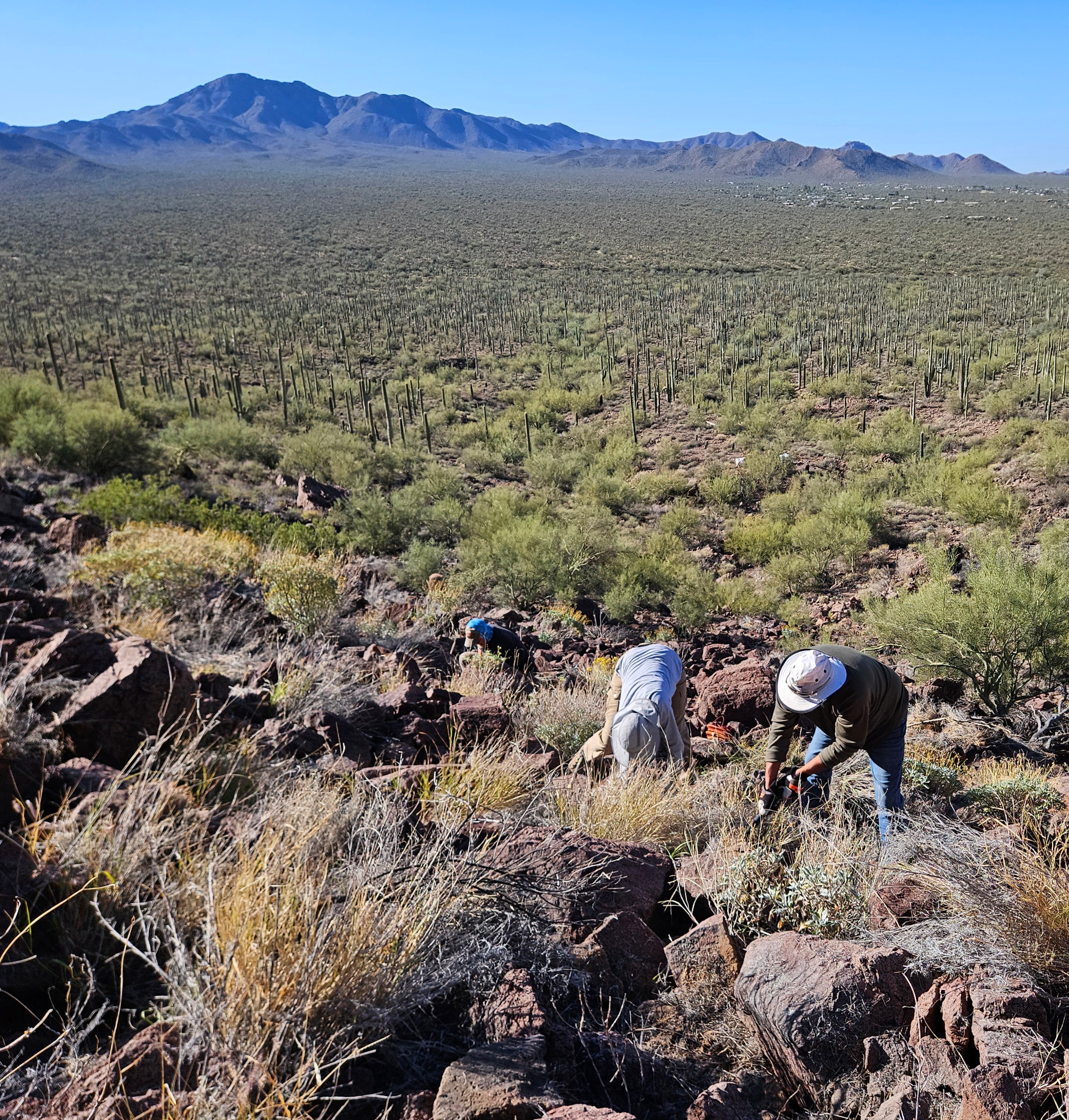
Kit Lancaster volunteering at Saguaro National Park.
Stelter Principal Account Executive Libby Felton volunteers at Heart and Soul Equine Foundation, Inc., grooming horses, making minor fence repairs, filling buckets and delivering grain to 20 stations. Libby grew up around horses and says volunteering at the sanctuary is “food for the soul.” The operator of the sanctuary has health issues and relies on volunteers to care for the horses and keep the farm running.
“Volunteering is a simple way to make a real difference—your time and energy can change someone’s day, or even their life. When you show up for others, you often walk away with a stronger sense of purpose and connection.” – Libby Felton
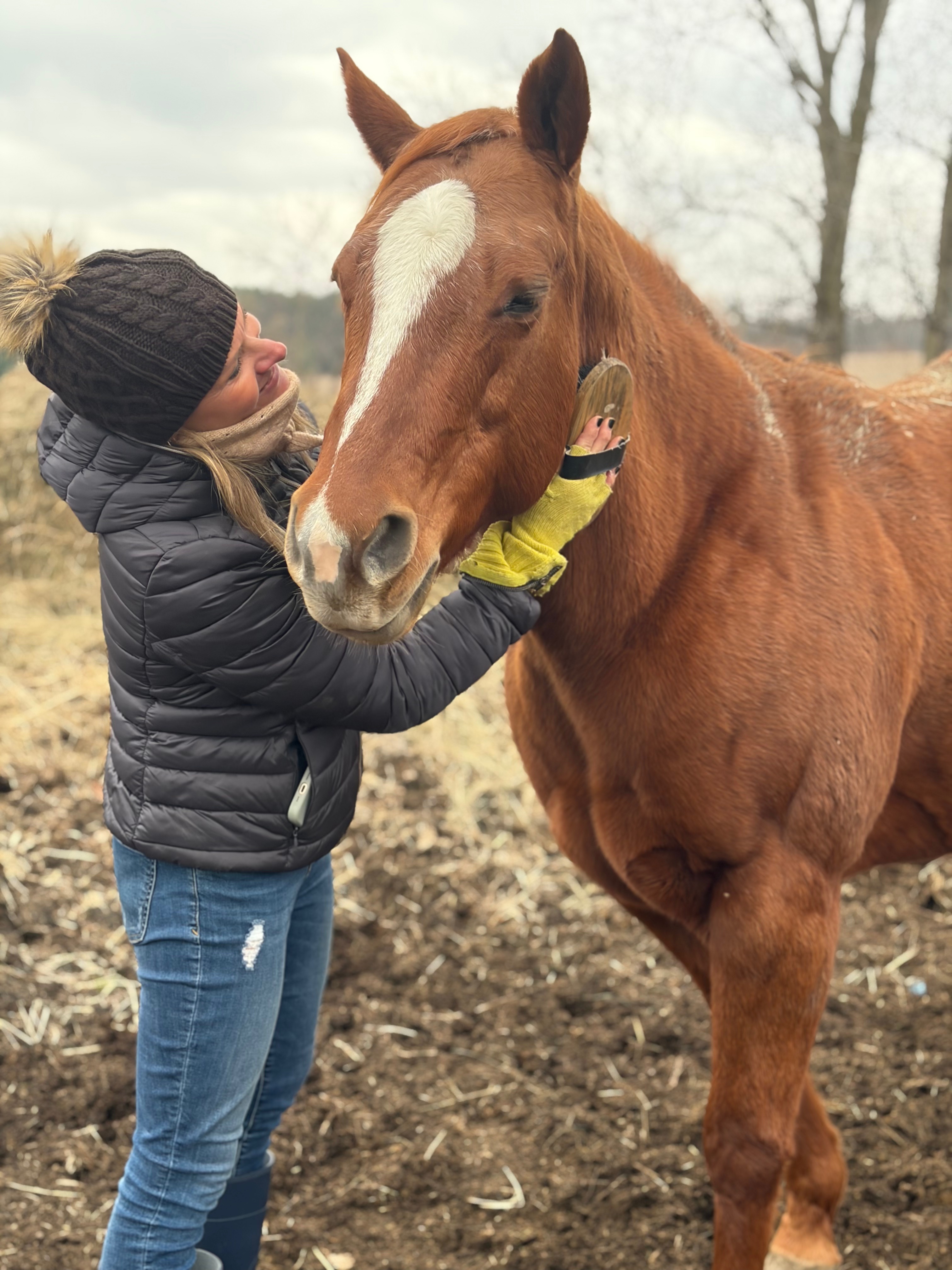
Libby Felton volunteering at Heart and Soul Equine Foundation, Inc.
Client Success Manager Cory Rooney volunteers with Medical City Frisco, an acute care hospital that offers a broad range of services, including a Level III neonatal ICU (NICU). She has a deeply personal connection—her daughter spent three days in the NICU and was given adorable little hats that the family kept as cherished mementos. Cory wanted to provide the same small comforts to other NICU families by embroidering the hats with small doodles.
“Returning to the hospital was emotional but meaningful; while it holds memories of fear and uncertainty, it’s also the place that ultimately saved my daughter’s life when she was born unresponsive. Having been through that experience, I understand how overwhelming the NICU can feel, and even something as simple as a cute hat can bring a moment of comfort and joy to parents during such a difficult time.” – Cory Rooney
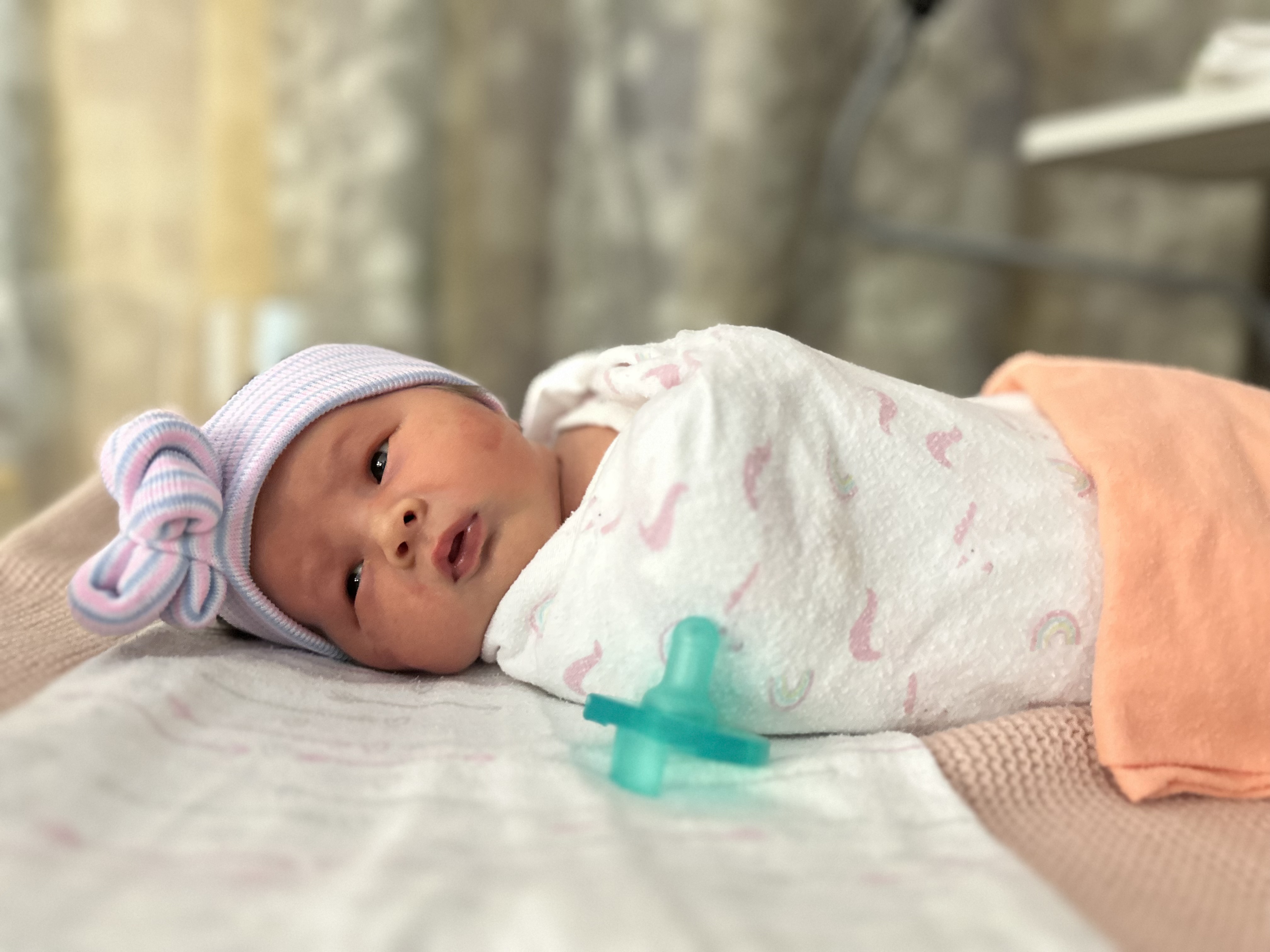
Cory’s baby in her hat from the Medical City Frisco NICU.
Marketing Team Lead Jen Lennon and Database Integrity Associate Madalyn Evans teamed up to package meals at Meals from the Heartland, a West Des Moines, Iowa, nonprofit made up of volunteers from the community. The organization packages meals for delivery to malnourished people in Iowa, across the United States and around the world. Volunteers pack about 540 meals per two-hour shift.
“Food insecurity impacts 1 in 8 Iowans and 1 in 6 Iowa children, according to Feeding America’s Map the Meal Gap 2025 study. With recent cuts to SNAP and WIC benefits, the need is only growing—making organizations like Meals for the Heartland critical to the health and well-being of our state. Volunteering is a simple way to make a difference, and doing it alongside a coworker and friend makes it even more meaningful.” – Jen Lennon
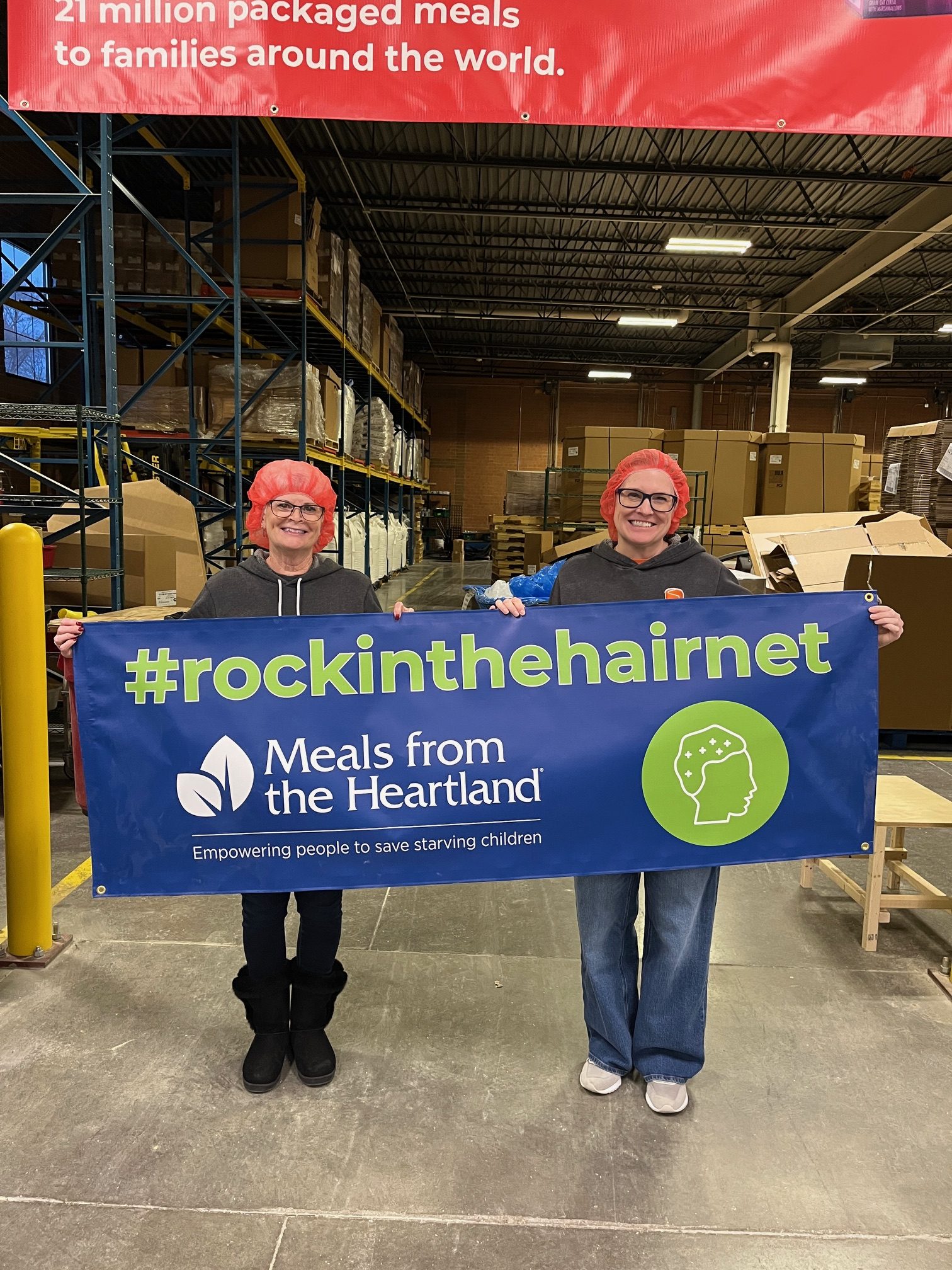
Madalyn Evans and Jen Lennon volunteering at Meals for the Heartland.
Building on the Momentum of VTO
Reading through these stories, it’s clear that volunteering means something different to everyone—but the impact is always real. Each hour your staff give to causes they care about strengthens connections, builds skills, and contributes to your nonprofit’s mission in meaningful ways.
That’s why it’s worth stepping back and thinking about the bigger picture: what these opportunities mean not just for the people volunteering, but for your volunteers, your mission and the long-term support your organization can cultivate.
Research shows that volunteering boosts employee engagement, morale and retention, while also helping individuals build valuable skills like leadership and communication. At the same time, nonprofits benefit from increased capacity, specialized expertise, and stronger relationships with people who are already invested in the mission.
For your nonprofit, that last point is especially important. Your volunteers are often among your most engaged supporters—people who show up, give their time and believe deeply in your work. That kind of connection is the foundation for long-term support, including planned gifts.
When you recognize, engage, and communicate with your volunteers intentionally—not just as supporters, but as part of your long-term donor community—you’re not just thanking them for what they do today. You’re building relationships that can grow into sustained support, including planned gifts, and help carry your mission forward for years to come.
(P.S. National Volunteer Week is next week, April 19-25! Explore ways to celebrate your volunteers and download free images to help you share your appreciation.)
Take a look at the photo collage below to see more of our team in action, giving their time and talents to causes they care about. (See if you recognize any of your Stelter team! Click images to enlarge and read details about their volunteer work.)