

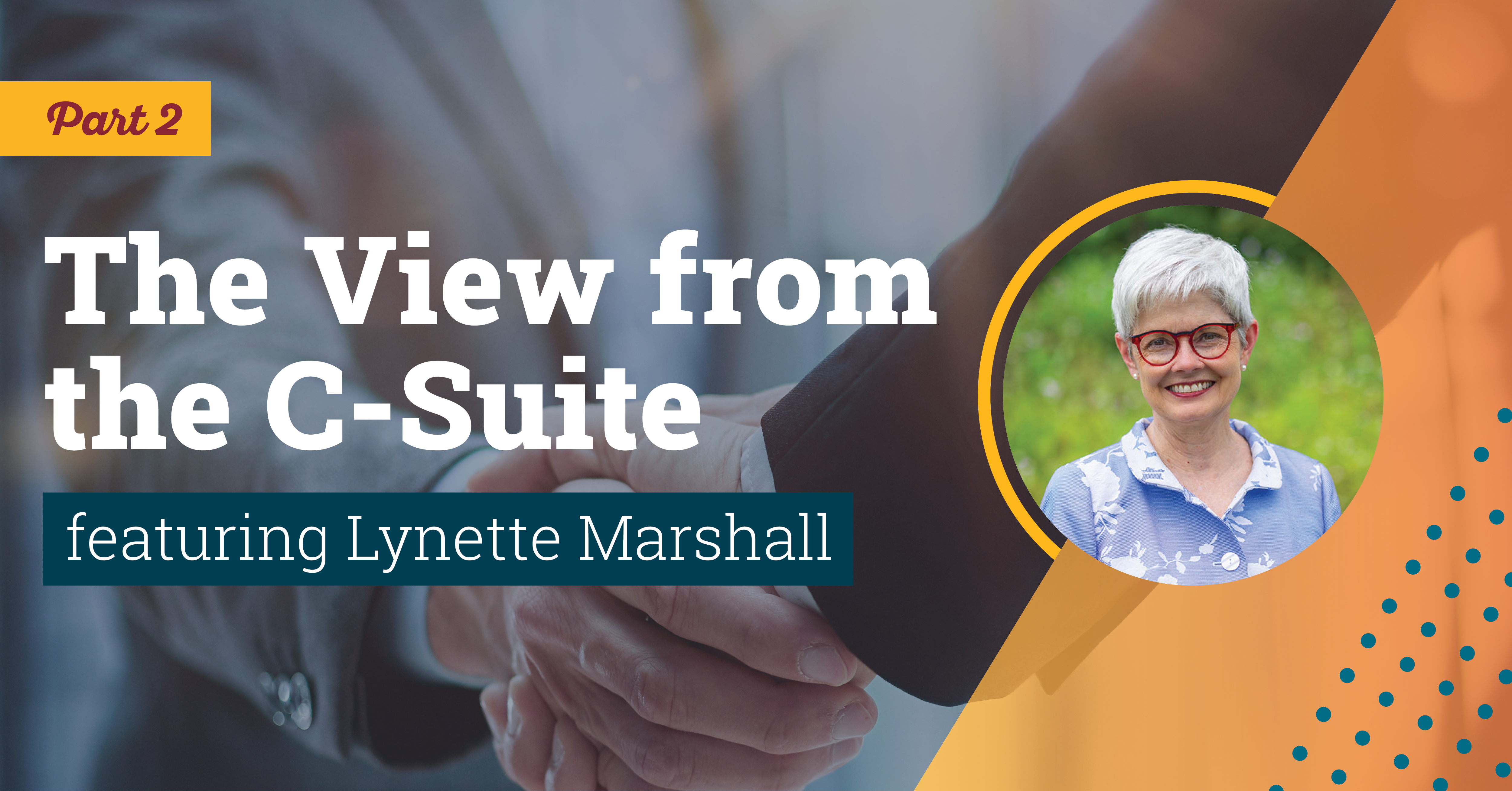
Welcome back to our new conversation series exploring planned giving through the eyes of senior leaders. For our second installment, I sat down with Lynette Marshall, who recently retired after two decades as president and CEO of the University of Iowa Center for Advancement. During that time, she helped build a strong culture of philanthropy and led major fundraising efforts, including the historic For Iowa. Forever More. campaign, which raised more than $1.975 billion to support health care, research, education and the arts.
If you know a C-suite leader I should talk to, reach out to me at nathan.stelter@stelter.com to recommend them.
Nathan: To start, we know that planned giving is a long-term endeavor. It doesn’t happen overnight, and the results aren’t always immediately apparent. As Iowa’s program has evolved, and the school goes in and out of campaigns, how have you assessed the value of your planned giving program and its return on investment year over year?
Lynette: I think of planned giving as a tool and a technique. You want the donor to make the best gift for their personal financial situation. So, we have not really focused on thinking about the ROI for planned giving versus outright gifts. We have that as a tool in our toolbox, but it’s not something that we have ever segregated to say, “we’re going to see whether this is worth it.” Well, of course it’s worth it! It’s a legal technique to make a gift, so we’ve never felt like it needed to be broken down in terms of ROI.
Nathan: I love that. Some organizations are siloed and focused on measuring ROI year over year. But you can’t control when planned gifts are realized. To that end, one question that’s been coming up a lot lately is how to re-engage people who have already made legacy commitments. How do you reconfirm their plans in a smart, tactful way?
Lynette: About every 2 to 3 years, we send a planned giving documentation mailing that tells people what we have documented for them. We ask them to either affirm their gift, or to tell us how it’s changed. They have a chance to say, “no, you’re out of the will,” or “well, actually, it’s worth 2x, as opposed to 1x.” And invariably, that allows us to document substantially more income. So, not only do we appreciate the marketing that we’re able to do through your help, but it also creates an opportunity to reach back out to people who’ve already told us that we’re in their estate plans and make sure our documentation is accurate.
Nathan: I think that’s a great best practice, because people’s lives change. When they initially tell us of their gift intention, they may not give us any details. As you continue to steward and build that relationship, they may be more open to sharing. It’s that idea that your best planned giving prospect is somebody who’s already made a planned gift.
Lynette: Absolutely. And your best prospect for an outright gift is someone who has made a planned gift, if they haven’t already given during their lifetime. I can remember, over the course of my career, people who were making $25 annual gifts, and then the deferred gift booked at $100,000.
Nathan: Speaking of that, you all have been pretty consistent in having a more intentional approach to blended giving. When it comes to the front line, are people making multiple asks and thinking more holistically about what works best for the donor?
Lynette: Yes, absolutely. We train our fundraisers to think about both outright and deferred giving. And if they see one and not the other, then they might ask about the other. So, if you’re making cash gifts, but you don’t have a deferred gift in place, that’s an opportunity for a conversation. If you have a deferred gift but aren’t making cash gifts, that’s another opportunity to talk about whether you want to start making an impact during your lifetime so you can see it. It’s very much part of the conversation with outright donors, as well as deferred gift donors, if they aren’t doing both already.
Nathan: We sometimes hear about fundraising programs that are more territorial. They’re concerned about which unit gets credit when counting gifts. What are your thoughts on structuring planned giving as a centralized resource for all fundraising teams versus as a separate unit that competes with them?
Lynette: I’ve seen it done both ways. At Iowa, all of our staff have the opportunity for primary and secondary credit, and we have metrics for both primary and secondary activities. It does work well, and I would say part of the reason it works well at Iowa is because we’re completely centralized. When you aren’t centralized, it can hurt personal relationships, and it creates this us-and-them mentality that is completely unproductive.
Nathan: In that vein, what advice would you give to any nonprofit leader who may be hesitant, for whatever reason, to invest in planned giving?
Lynette: I think it’s unequivocally important to have time and resources dedicated to planned giving, and to recognize that it’s in service to the donor for the benefit of the institution. For the planned gift that is highly beneficial for tax purposes, that’s a responsibility that we have to the donor—to help them see how they can accomplish what they want to accomplish, still benefit their family and the charity, and save on taxes in the process. You’re not serving your donors or your institution very well without it.
Nathan: Is there anything else you’ve learned or seen that would be helpful for other leaders who are trying to figure out the role of planned giving, both now and in the future, and whether they want to invest their time, energy and resources in it?
Lynette: One of the things we did when we merged the Foundation and the Alumni Association was talk about the life cycle of an alum, and the different stages someone goes through between matriculating at a university, to being a young alum, to early career, married with family, mid-career, leadership roles, retirement age and so on. The goal was to recognize that different parts of our fundraising operations are useful at different stages of a donor’s life. For some people, maybe they’re creating their first will because they’ve just had a baby, and they also want to document something for their alma mater. But it’s a lot more likely to happen later in life, once the kids are out of college. Planned giving needs to be an available resource—to the staff and to the people you’re serving who want to be loyal and generous to your institution. It just has to be part of it, right? You are doing yourself and your organization a disservice if you don’t have a skill set in this area that your staff can call on.
As Lynette reminds us, planned giving doesn’t have to operate in a silo. When it’s integrated throughout an advancement program, it becomes an invaluable resource for fundraising teams and the donors they serve.
Stay tuned for the next conversation, where I sit down with Tim Whalen, chief development officer of Save the Redwoods League. We’ll explore the importance of playing the long game, and what sustained investment in planned giving can accomplish over time.
And if you know a C-suite leader who could bring valuable perspective to this series, please contact me at nathan.stelter@stelter.com.